Sustainable Journalism; Collaboration or Competition

The 24/7 news cycle time-crunch and money losses makes it difficult to produce well-crafted or in-depth journalism. Niche reporting and media collaborations offer some possible solutions to these problems and, consequently, are beginning to make competition more obsolete, according to a Wednesday ASNE 2010 panel.

"You are going to see more and more partnerships because of the efficiency and effectiveness on both ends," said Editor of The San Diego Union-Tribune Jeff Light.

The panel mentioned a couple of of reasons these partnerships could flourish.

Media partnerships allow for companies to focus on their strengths, making the end-product better and increasing revenue on both sides.

"We do what we're good at, which is reporting, and they do what they're good at, which is production," Voice of San Diego's Andrew Donohue said about his company's partnership with NBC.

But its not just reporting and production skills. Sometimes it's as simple as knowing the issue.

Investigative nonprofit models, for instance, allow for small groups of journalists to focus on in-depth reporting on very specific problems or tips of interest.
Many times daily paper's reporters are assigned to a beat and can cover an investigative piece "if it comes up." However, these nonprofits can spend time picking out prominent issues without worrying about daily product.

Nonprofit media organization are separate from newspapers and can receive outside donations, grants, or even payment for product in order to conduct their research with the depth it deserves.

By working with other news organizations, the audience expands and there can be increased revenue.

It's typical for 8 percent of the adult population, approximately 160,000 people, to view a local newspaper Web site, said Light. To get to 10 percent is difficult.

Just because there are collaborations doesn't mean there won't be any competition. For instance, daily papers or daily news sites can still compete since there's a likelihood they will cover the same news.

But with a down-turn in many newspapers' profits, playing to your strengths and supplementing with specializing news or other multimedia are not out of the question.

"We don't need to be the number two or even number three to be profitable," said Associate Publisher of San Diego News Network Barbara Bry. "There is room for more than one journalistic enterprise to make money."

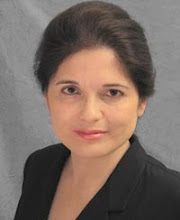
by Rachel Leven for the University of Maryland

The 2010 Census: Covering the Best Story of Your Life


Speakers LaBarbara Bowman [ASNE], Charlotte Hall [Orlando Sentinel] and Gregory Moore [The Denver Post] discuss the importance of this year, 2010, from a journalist's perspective in their workshop The 2010 Census: Covering the Best Story of Your Life. This year marks the year of the 2010 Census and as a journalist, this is a time when coverage means everything. The major theme of this year's census is: major racial changes in 21st century America,

"Cover the story as a human piece", said Hall. "It's amazing to see what makes a family a family, so don't just focus on the numbers," she said. To Hall, the 2010 census is a way for this 21st century America to see just how far we really have come as a people. It is a way for us to begin to know and learn about the people that make up this power-house of a country.

Moore, who serves as Senior Editor of the Denver Post shared an anecdote of people who he has encountered who are ignorant to who the people of the county are. Ignorant in terms of categorizing all latinos as Mexicans or Puerto Ricans, without taking the time to learn who they really are; their true countries of origin.

"We don't know who makes up our communities," said Moore. "We don't talk about our Indian communities, or being here in DC, our Ethiopian community. As journalists, we have the chance to go out and represent these communities with our coverage of the census," he added.

The breakdown for the 2010 Census Calendar dates are as follows:

April 1-April 16; U.S. residents mail back their census forms

May; Census workers visit every address that has not returned their census form

July; December; Crunching the numbers

Christmas Week; First numbers to show political winners and losers

For more information on the 2010 Census, including an up to date news room full of press materials, visit

-Compiled by Gerron Jordan, Howard University

Kids at Texas high school use ASNE's my.hsj.org to do journalism

Eric Schmidt at ASNE

Good Outlook for Opportunities in Online Journalism

Despite the growing opportunities online, Joel Dreyfuss, managing editor of The Root finds that diversity in online staffs lags behind its more traditional news counterparts.

“It has not been a priority,” he said. “The majority of large sites – Huffington, Slate – are not very diverse and have not had the pressure to diversify.”

The panelists of “Online Journalism: New Opportunities for Journalists of Color?” shared their perspective on the opportunities online journalism offers for journalists of color, which, in reality, is applicable to journalists of all backgrounds.

For journalists, deterred by the new techniques of reporting online, the panelists agree there’s always room to adapt to online reporting.

While the mediums may have changed –social networking, search engine optimization and video – the skills necessary for online content are the same as traditional media: story telling and news judgment. And, because online technology is learnable, the door of opportunity online is open to journalists of all levels of technology know-how.

“This is a industry that’s evolving so much that the knowledge base keeps shifting, so even the people who were experts last years are not experts this year,” Dreyfuss said.

What gives a reporter an advantage in the news industry is a unique angle, Eduardo Hauser, founder and CEO of Daily, Me. Inc. said. That may come in the form of ethnic background, interest or personal experience. The fragmentation of converged media allows for more perspectives to be shared among the public.

The Bottom Line: There’s growing opportunity for journalists of all backgrounds online. While new media comes with a lot of new rules and methods, those are all learnable. Story telling is the fundamental root of all types of reporting, online included.

“I don’t think that training is necessary,” panelist Ty Ahmad-Taylor, founder of and CEO of FanFeedr, said of new talent. “I’m just looking for people that can communicate.”

- Aleesa Mann

Partner Up: The Benefits of Collaborations Between Universities and News Organizations

The fun thing about journalism is that it's a hands-on experience. You don't wait to be a journalist, you just are, and the best way to strengthening your skills is to write. The panelists of "You and U: Finding Partners at Local University" know this, and shared their take on how partnerships between universities and local new outlets can be beneficial to both parties.

Why would a local news outlet want to partner with a university?

Students are a source of enthusiastic, raw talent
Students offer a different perspective that can generate new ideas and projects for the paper
Faculty can contribute their expertise to student efforts
The sponsorship is cost effective
Students can devote substantial time to a problem
The paper gets new content through student contributions

Why should universities partner with a local new outlet?

Students can get professional experience

Jody Brannon, News21 National Director, offered one example of how a partnership can work. At Arizona State, sophomore or junior students partner with the Arizon Republic. They enroll in a program for credit and are also paid for working with the paper two days a week.

The students get experience, and the paper gets new content. The students report mostly on breaking-news issues and the traffic generated by this new content accounts for about 10 percent of page views for the Republic, Brannon said.

There are other programs at other universities that serve as examples of successful partnerships between students and local publications. These relationships bridge the gap between student and professional journalists, proving there is a lot the two can learn from each other.

"There are fields where the academy leads the industry," panelist Rich Gordon, association professor at Medill School, Northwestern University, said.

In areas like medicine and science many breakthroughs occur in research labs on university campuses, outside of the professional sphere.

"It's time we apply the same line of thinking to journalism," Gordon said.

- Aleesa Mann

Google CEO, Eric Schmidt on Net Neutrality at ASNE10

Google, Inc. CEO & Chairman, Eric Schmidt speaks on net neutrality during a question and answer session following his keynote address at the American Society of News Editors Convention in Washington, D.C.

Reporter: Kendra Desrosiers, Howard University


Google CEO, Eric Schmidt Talks Social Networking and Politics at ASNE10

Google, Inc. CEO & Chairman, Eric Schmidt speaks on the impact social networking can have on the role of money in politics during a question and answer session following his keynote address at the American Society of News Editors Convention in Washington, D.C.

Reporter: Kendra Desrosiers, Howard University


Do you think social media has lowered the financial barrier of entry in Politics?

Google CEO, Eric Schmidt on Chinese Censorship Rules

Google, Inc. CEO & Chairman, Eric Schmidt speaks on Chinese censorship rules during a question and answer session following his keynote address at the American Society of News Editors Convention in Washington, D.C.

Reporter: Kendra Desrosiers, Howard University

Photos from Opening Night


ASNE President Martin Kaiser congratulates Charlotte Hall of the Orlando Sentinel for helping ASNE through the recent economic crisis


David Boardman of The Seattle Times welcomes everyone


Rex Smith of the Albany Times Union gives a presentation about high school journalism with my.hsj.org


Anders Gyllenhaal of The Miami Herald talks about how journalists in Haiti coped with the recent earthquake


Ken Paulson, president of the Newseum and Freedom Forum, talks about the Liberty Tree Initiative and its First Amendment ad campaign set to launch in July


Google chairman and CEO Eric Schmidt gives the keynote address


ASNE members and press in the audience


Schmidt talked about the power of the Internet, especially the growing amount of access from mobile phones


Schmidt and convention co-chair Pam Fine


Kaiser previews his upcoming presidential address

Welcome Reception


New members and partners meet and greet at the welcome reception


How to post to the ASNE10 blog

This site has been designed to make it convenient for you to share your take on ASNE10 -- in real time or whenever you want.

We encourage comments from anyone who is reading the blog posts -- even those who are not attending the conference -- although we will require users to register and identify themselves in order to comment.

Blogspot/Blogger

The first 100 attendees to contact Craig Branson at cbranson@asne.org can get added to the blog list to blog about the event.

Twitter

To be part of our Twitter-stream use hashtag #asne10.

CoveritLive

Like live blogging, but want it in longform? Let Craig Branson at cbranson@asne.org know.

Flickr and YouTube
To add photos, use the ASNE10 tag to your Flickr photos from the event. For video, contact cbranson@asne.org.

Welcome

The unofficial blog for the American Society of News Editors News Now Ideas Summit is ready for your posts. Everyone who visits this site can take part in the action.

Whether or not you're with us for the entire April 11-14 conference at the J.W. Marriott Hotel in Washington D.C., your ideas and observations are welcome 24-7.

Blogs will appear here, and a Twitter-stream (use hashtag #asne10) will run on the CoverItLive portion of this site.

Anyone who is registered to blog can also use the CoverItLive tool on the site to live blog events during the conference. Tweets will appear in real time adjacent to blog posts within the CoverItLive frame.

There's also an area on the blog where you can upload photos.

If you haven't yet registered for the convention or want to see a detailed schedule, you can get to it under "Links we like."

Once the convention begins, you can view presenter handouts made available to us after their sessions. It will also be under "Links we Like."

Please see Craig Branson's post for details about how to register for this blog to post, add photos or comments.

Looking forward to seeing you at ASNE10.